Kaunos Rock Tombs Seen From The Dalyan Boat Trip
The king's rock tombs above the Dalyan river are the image most visitors carry home. Here is what they are, and which boat trips actually bring you past them.
Short answer
The Kaunos rock tombs are 4th century BC chamber tombs cut into the cliff above the Dalyan river with facades shaped like Ionic temples. Every shared boat trip covered here passes or photographs them from the water; only the Arbek Classic from Dalyan (from €38 per person) and the private full-day Ekincik boat (from €584.90 per boat) add a guided stop at the city.
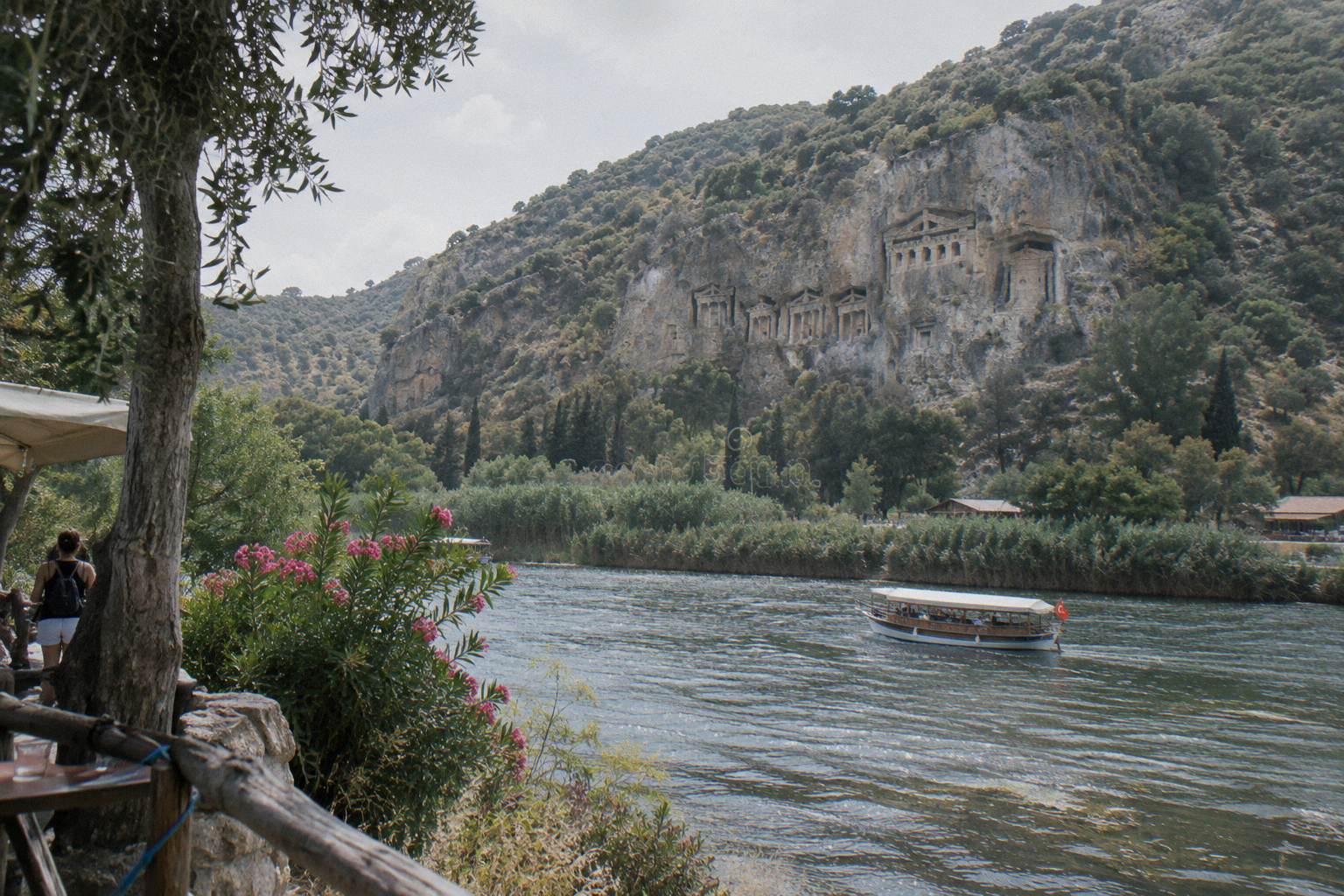
The single most photographed sight on the Dalyan river is a row of temple-shaped openings cut high into a cliff on the western bank. Those are the king's rock tombs of Kaunos, built in the 4th century BC and reused in the Roman period, and they are visible from the town itself as well as from the water, according to the Turkish Ministry of Culture and Tourism's museum directory (the museum directory entry for Kaunos). For most visitors, the boat trip is the way to see them, and the question that decides which trip to book is a simple one: does the boat just pass the tombs, or does it stop at the ancient city behind them?
What Are The Kaunos Rock Tombs?
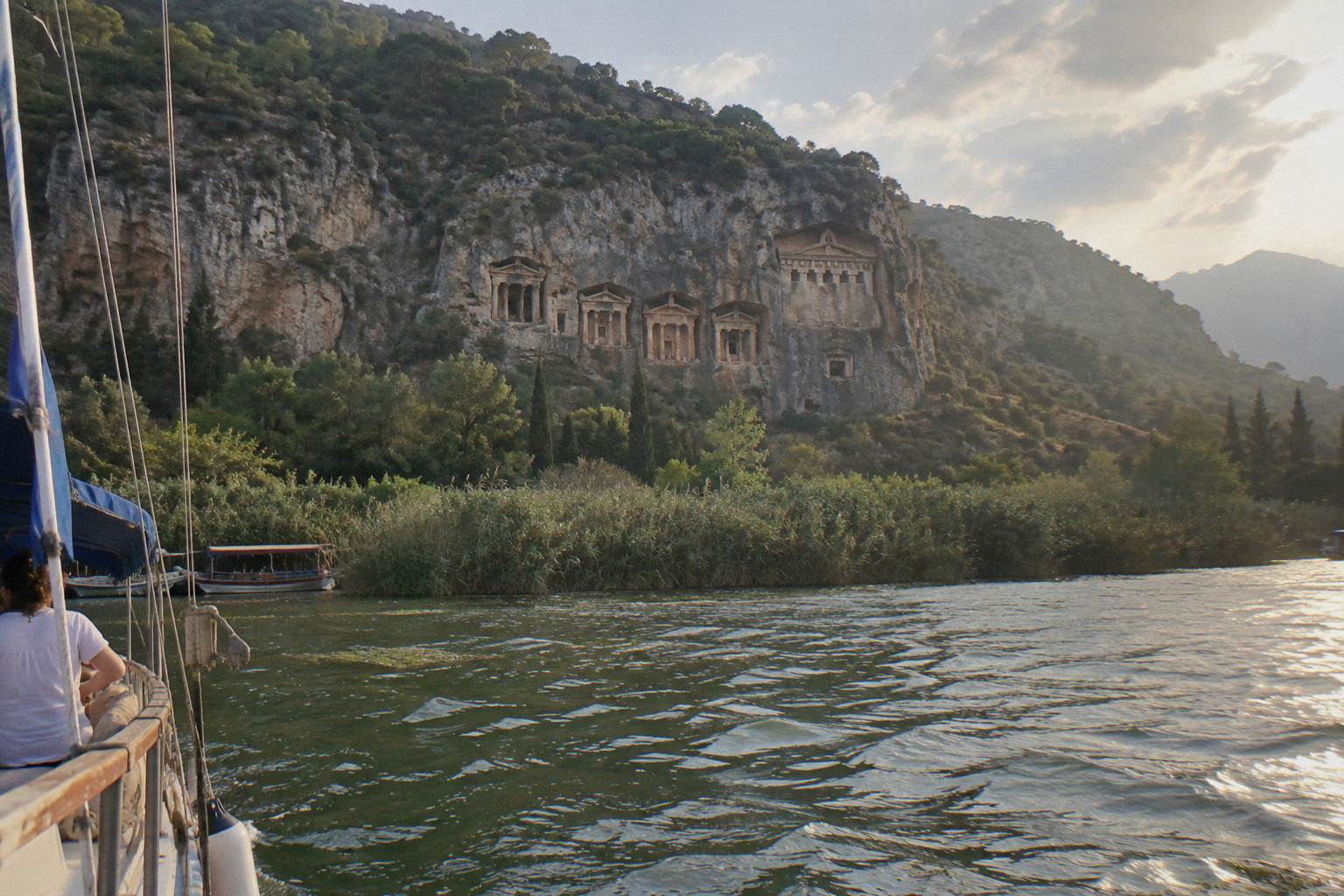
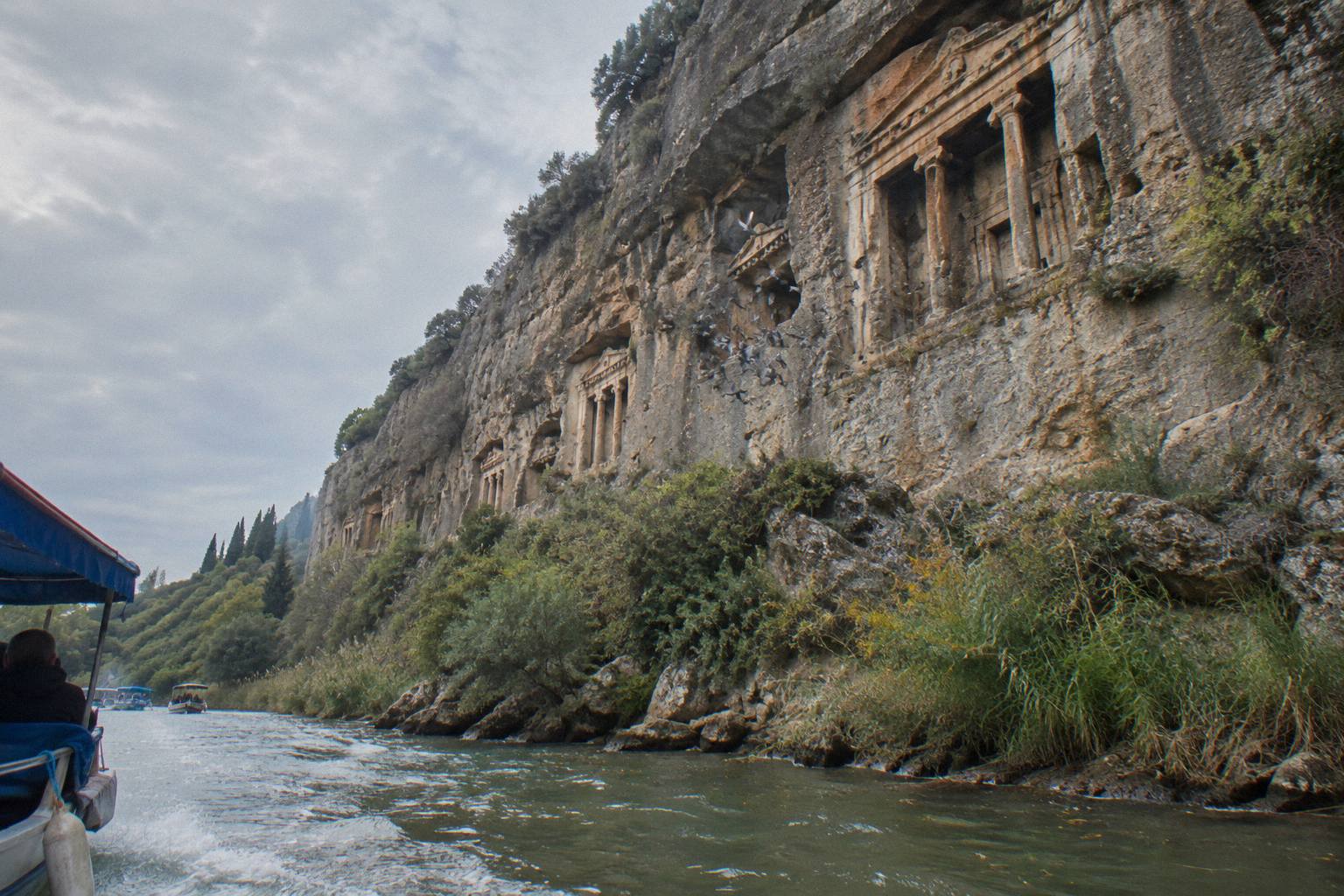
The tombs are chamber graves of the kings and notables of Kaunos, cut into the cliff face in the 4th century BC with facades shaped like Ionic temples, and the easternmost one was left unfinished when Alexander arrived. They were reused in the Roman period, and hollows carved beside them once held fires that guided ships into the ancient harbour.
Kaunos itself lies on the western bank of the Dalyan river, inside Çandır village in the Köyceğiz district, directly opposite Dalyan town. The city sat on the old border between Caria and Lycia, and it can be reached by road from Dalyan or by water, as the Ministry of Culture and Tourism's portal explains (the Ministry portal's page on Kaunos). The tombs you see from the boat are only the opening act: the site above them holds an acropolis on a 152 m hill, a theatre with 33 rows, a basilica-type church, Roman bath and temple remains, a stoa at the old harbour, and city walls from several periods.
The temple facades are the reason the tombs read so clearly from a moving boat. Each one is a rectangle of pale stone framed by columns and a pediment, cut vertically into the rock so the face catches light for most of the day. The unfinished easternmost tomb shows the working method plainly: the facade was carved from the top down, so the part that was never completed simply fades into raw cliff. The Ministry portal notes that these tombs are the first remains a visitor sees when approaching the site.
Two details reward a slower look. The first is the scale: the chambers sit well above the waterline, high enough that the fires once burned in rock-cut hollows beside them would have been visible from out at sea, serving as beacons for ships approaching the ancient harbour. The second is the reuse. Built in the 4th century BC, the tombs were used again in the Roman period, which is why some chambers show later modification. Kaunos has also been on the UNESCO World Heritage Tentative List since 2014.
| What The Sources Say About The Tombs | Detail |
|---|---|
| Date built | 4th century BC, reused in the Roman period |
| Design | Rock-cut chambers with facades like Ionic temples |
| Unfinished tomb | The eastmost, abandoned when Alexander arrived |
| Beacon hollows | Rock-cut hollows held large fires as harbour beacons |
| Visibility | Can be seen from Dalyan and from the river |
| UNESCO status | On the Tentative List since 2014 |
Do Dalyan Boat Trips Stop At The Rock Tombs?
Almost every shared boat trip on the Dalyan river passes the rock tombs and slows for photographs, but passing is not visiting: the boats stay on the water and no landing is made. Only two of the trips covered here include a guided stop at the ancient city itself, and the private half-day boat holds a 30-minute viewing stop on the river.
The distinction matters because photographs of the tombs are often taken from the water, which makes it look as though every trip goes ashore there. It does not. On a standard day, the river cruise leg of the trip carries the boat down the reed-lined channel past the cliff, the guide points out the facades, and the boat continues toward the mud baths or İztuzu Beach. The King's rock tombs are seen from the river, and that is the whole experience on most departures.
The two exceptions are the Arbek Classic from Dalyan and the private full-day Ekincik boat, both of which include a guided stop at the city of Kaunos. Everyone else sees the tombs as a river spectacle, and for many visitors that is enough: the facades were designed to impress from a distance, and the boat gives the same approach a ship would have taken in antiquity.
If the tombs are the reason for the trip, the choice is between a standard river day with a photo pass and one of the two departures that actually stops at Kaunos. The Tourmania day from Marmaris is a strong example of the standard format: from €50 per person, 10 hours, hotel pickup and drop-off, lunch, and a mud bath stop included, rated 4.5 from 298 reviews. It passes the tombs without a city visit. Check availability
Which Trips Show The Tombs From The River?
Every shared boat day in this list includes the river cruise leg past the King's rock tombs, from the €18.28 per person three-deck boat out of Marmaris to the €99 per person Tourmania bus day from Bodrum. The price differences come from distance, transfers and lunch, not from the tombs, which every one of these boats sees from the water.
Because the tombs sit on the main channel between Dalyan and the river mouth, no operator can route around them. A boat going from Dalyan toward İztuzu Beach, or from Ekincik down toward the mud baths, passes the cliff. That is why the rock tombs appear on every river trip's description, from the shortest Marmaris day to the longest Bodrum excursion, and why price alone never tells you whether the tombs are included. They always are, from the water.
What the price does tell you is how far you travel to reach the river. The Marmaris boats are the cheapest entries: the Three-Deck Boat, Lunch And Tombs day runs from €18.28 per person over 10 to 11 hours, rated 4.4 from 49 reviews, with hotel transfer both ways, lunch, and the mud bath and İztuzu entrance fees included. The Arbek Marmaris day with Aquarium Bay runs from €28 per person, rated 4.2 from 26 reviews, over 10 hours with lunch and the mud bath entrance included. From Bodrum, roughly 2.5 to 3 hours away by road, the Tourmania bus day runs from €99 per person over 12 hours, rated 4.2 from 43 reviews.
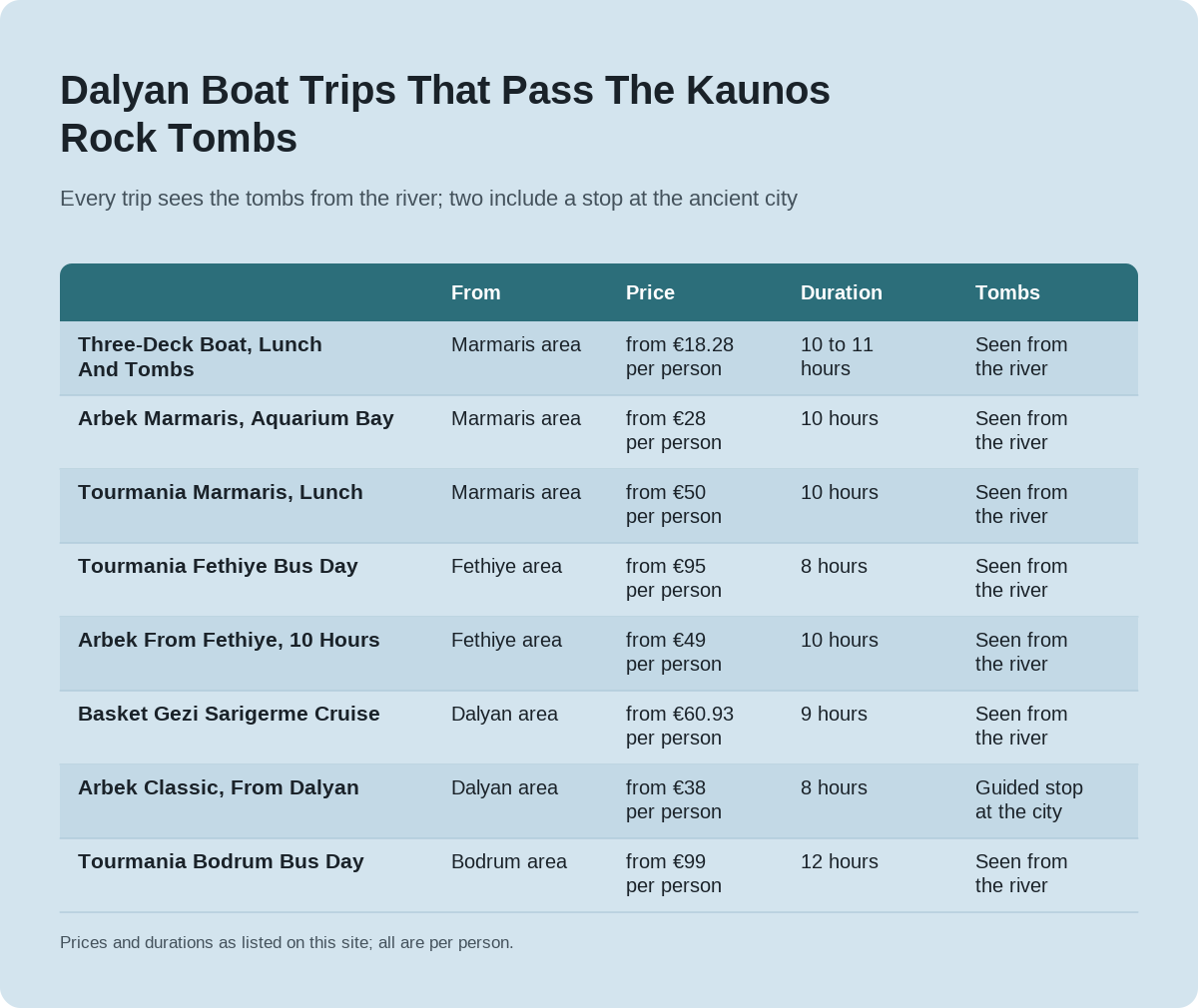
The table below lists the trips by departure area, with the two that add a guided stop at the city marked out. Ratings print only where a trip has enough reviews for one to mean something; where the pool is small, the label is to check before booking.
| Trip | From | Price | Duration | Rating | Tombs |
|---|---|---|---|---|---|
| Three-Deck Boat, Lunch And Tombs | Marmaris area | from €18.28 per person | 10 to 11 hours | 4.4 from 49 reviews | Seen from the river |
| Arbek Marmaris, Aquarium Bay | Marmaris area | from €28 per person | 10 hours | 4.2 from 26 reviews | Seen from the river |
| Tourmania Marmaris, Lunch Included | Marmaris area | from €50 per person | 10 hours | 4.5 from 298 reviews | Seen from the river |
| Tourmania Fethiye Bus Day, Lunch | Fethiye area | from €95 per person | 8 hours | 4.6 from 50 reviews | Seen from the river |
| Arbek From Fethiye, 10 Hours | Fethiye area | from €49 per person | 10 hours | 4.3 from 30 reviews | Seen from the river |
| Basket Gezi Sarıgerme Cruise | Dalyan area | from €60.93 per person | 9 hours | 4.9 from 65 reviews | Seen from the river |
| Arbek Classic, From Dalyan | Dalyan area | from €38 per person | 8 hours | 4.2 from 20 reviews | Guided stop at the city |
| Tourmania Bodrum Bus Day, Lunch | Bodrum area | from €99 per person | 12 hours | 4.2 from 43 reviews | Seen from the river |
| Private Boat, Half Day | Dalyan area | from €329.01 per boat | 4 hours 30 minutes | Fewer than 20 reviews | 30-minute viewing stop |
The Arbek Classic from Dalyan deserves its place in the table. It is one of only two trips here that include a guided stop at the city of Kaunos itself, alongside the mud bath, a hot springs stop, and İztuzu Beach, with hotel pickup in Dalyan one way only, a local guide, lunch, and the touring boat on the canal included. It runs from €38 per person over 8 hours, rated 4.2 from 20 reviews, with free cancellation up to 24 hours before the start. Drinks and extras are excluded, and the line notes that the mud shower is an extra and that İztuzu sunbeds and umbrella are an optional extra.
If the tombs themselves, rather than the city, are the draw, the cheaper Marmaris boats deliver the same river pass at a fraction of the Bodrum price. The distance from Bodrum, roughly 2.5 to 3 hours each way, is what pushes those days to 12 hours and beyond, while a Marmaris departure is roughly 1 to 1.5 hours from Dalyan by road. For more on that trade, see the guide to whether a Bodrum day with a mud bath stop is doable.
Which Trips Include A Guided Stop At Kaunos?
The Arbek Classic has already been described above, so the private boats deserve the space here. The full-day private Ekincik boat, run by Dalyan Boat Tours, runs 7 to 9 hours from Dalyan harbour and includes the guided city visit at Kaunos, İztuzu Beach, lunch, and snorkel, paddleboard and noodles, from €584.90 per boat for the boat rather than per person. Drinks are excluded. Free cancellation applies up to 24 hours before the start. Ratings for this trip should be checked on the booking page before booking.
The half-day private boat is a different animal. It has no mud bath stop at all, and it does not land at Kaunos; instead it holds a 30-minute viewing stop at the rock tombs and the ancient city from the river, which is longer than any shared boat lingers. It runs 4 hours 30 minutes from the boat on the Dalyan channel, from €329.01 per boat, with snorkelling equipment and coffee or tea included, and no free cancellation is stated. For a comparison of when a private boat earns its price against a group day, see when a private boat in Dalyan beats a group tour.
One caution on wording. The private full-day boat's line does not mention a mud bath, so nothing about one is promised here; its value is the city stop, the beach and the privacy. The half-day boat is the shortest route to an unrushed look at the tombs, but it is a look from the water, not a visit to the city.
What To Look For From The Water
Watch for four things as the boat passes the cliff: the temple-shaped Ionic facades, the unfinished easternmost tomb that fades into raw rock, the rock-cut hollows that once held beacon fires for ancient ships, and the way the later Roman reuse altered some chambers. The guide on most boats names each of these as the boat slows.
The pass takes only a couple of minutes on most departures, so it helps to know what to look for before the boat arrives. The facades come first and are unmistakable: pale rectangular panels framed with columns and pediments, cut directly into the cliff, several of them in a row at the same height. The Ministry portal describes them as the first remains a visitor sees, and from a boat that is literally true: the acropolis, theatre and city walls sit behind and above, mostly out of sight from the water.
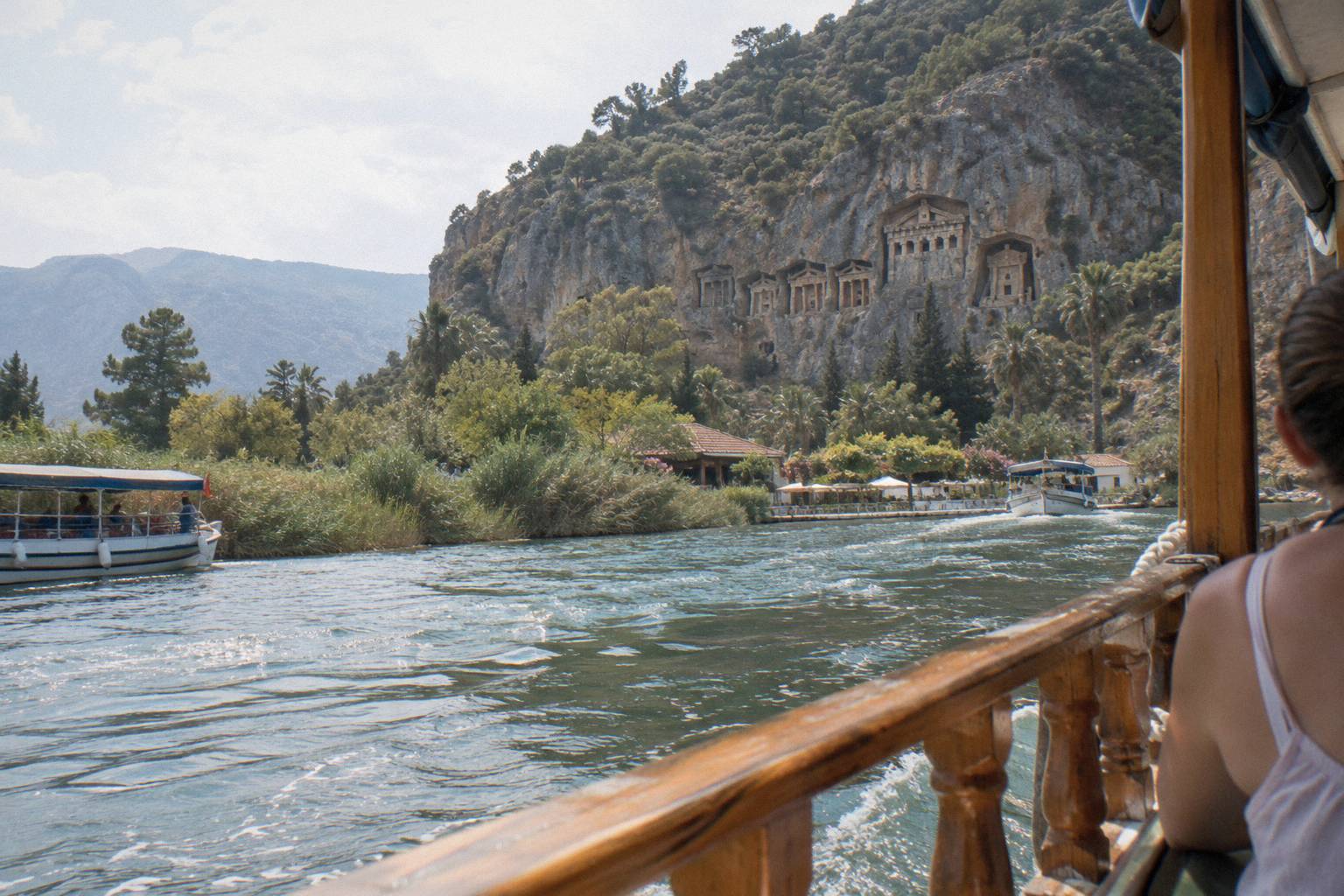
The unfinished tomb is the detail most people miss. At the eastern end of the row, one facade stops partway: the carving was done from the top down, and when Alexander's arrival overtook the city the work was abandoned with the lower portion still raw rock. The beacon hollows are easier to spot than their purpose suggests: rectangular cuttings in the rock face beside the tombs, which the museum directory records as the seats of large fires that served as beacons for ships at the ancient harbour (the museum directory entry).
| Feature | Where To Look | What It Is |
|---|---|---|
| Temple facades | The main row, high on the cliff | Ionic-style fronts of 4th century BC chamber tombs |
| Unfinished tomb | The eastmost of the row | Abandoned mid-carving when Alexander arrived |
| Beacon hollows | Rock face beside the tombs | Held fires that guided ships to the harbour |
| Roman reuse | Some chamber interiors and fronts | Tombs used again in the Roman period |
Beyond the tombs, keep an eye on the water itself. The channel is reed-lined the whole way down to the delta, and the river mouth end at İztuzu Beach is where the boats from Dalyan land. Caretta carettas nest on that beach from May to September, and the beach is closed to visitors from 20:00 to 08:00 during the nesting season, as the Ministry portal notes (the Ministry portal's page on Dalyan). The tombs and the turtles are the two anchors of the same boat day, roughly an hour apart on the water.
The Fethiye departures follow the same river leg after a longer road transfer. The Tourmania Fethiye bus day, from €95 per person over 8 hours, rated 4.6 from 50 reviews, includes hotel pickup and drop-off, the mud bath, a professional guide and lunch, and passes the tombs on the same channel. The Hesaplı Tatilci day from Fethiye, from €74.45 per person over 10 hours 30 minutes, rated 4.5 from 29 reviews, does the same with a riverside restaurant lunch and İztuzu entrance included; its booking page carries cautions worth reading before booking: "Not recommended for travelers with spinal injuries / Not recommended for pregnant travelers / Not recommended for travelers with poor cardiovascular health." For timing detail, see times, pickup and what to expect on the Fethiye day.
How The Silted Harbour Shaped The View
Strabo described a harbour that could be closed and shipyards that served it, according to the Ministry portal (the portal's Kaunos page). Over the centuries the Dalyan river deposited silt at the harbour mouth until the port was cut off from the sea entirely; the lake now called Sülüklü Göl is the drowned remainder of the ancient basin. The city that depended on sea trade ended up stranded inland, and the tombs cut into the cliff above the port now overlook a reed channel rather than a working harbour.
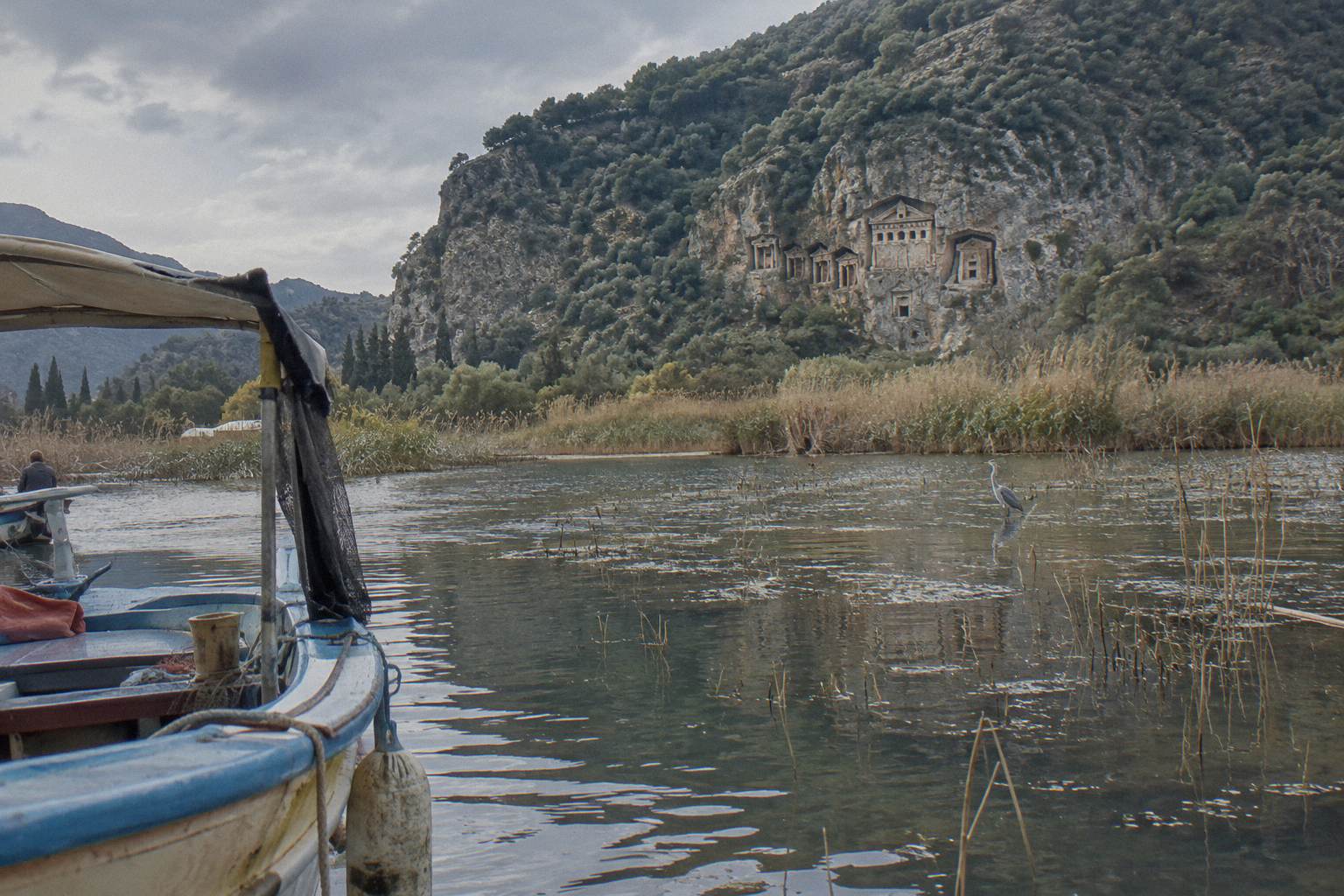
That geography explains the boat experience. The channel between the tombs and Dalyan town is narrow, so every vessel passes close to the western bank, and the facades fill the view for a longer stretch than a wide bay would allow. The same protected status that saved the reeds, the Köyceğiz-Dalyan Special Environmental Protection Area of 461 sq km, the first such area in Turkey (the protected area overview), also keeps the opposite bank low and green, so nothing competes with the cliff.
The whole river route, including the mud bath area and Kaunos, lies inside that protection zone. Building that might have lined the banks with hotels was checked decades ago, and Dalyan remains a small resort of hotels, guesthouses and restaurants strung along the channel. For a fuller account of the river leg itself, see what the river cruise on a Dalyan boat trip covers.
Can You Reach Kaunos Without A Boat?
Kaunos can be reached by road from Dalyan as well as by water, and day dolmuş motorboats also run on the river, but no trip in this list sells the tombs as a standalone visit. The practical choice for most visitors is a boat day that includes the pass, or one of the two trips with a guided stop at the city.
The Ministry portal confirms the city sits inside Çandır village, opposite Dalyan, reachable by road from Dalyan or by water. Independent travellers sometimes cross to Çandır and walk up to the site; the trips covered here, though, are built around the boat day, and none of them sells a tombs-only ticket. Going independently means arranging the crossing and the site yourself, with nothing here to confirm entry arrangements, so ask locally in Dalyan for the current setup.
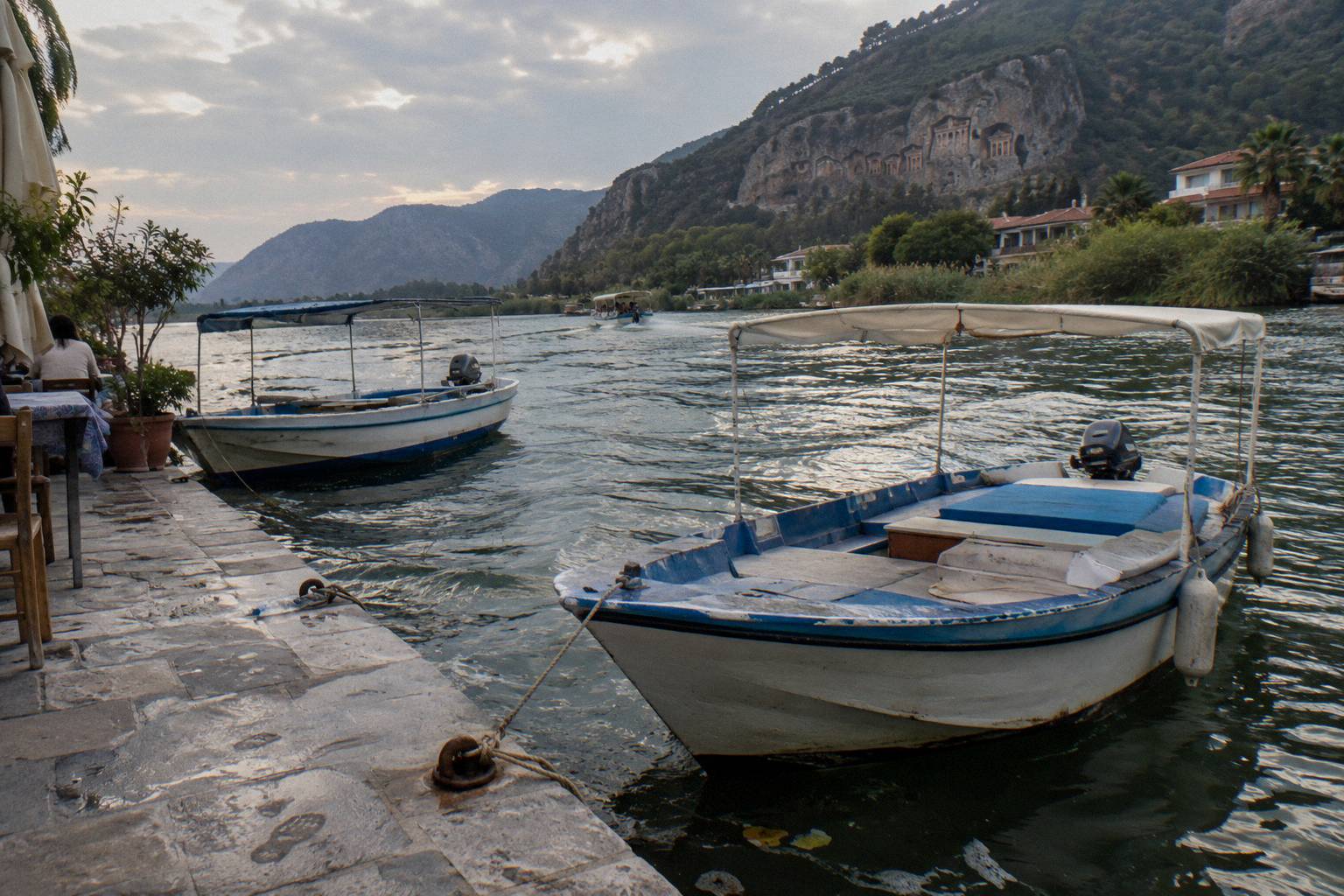
The boat cooperative structure is worth knowing about too. The Dalyan Boat Cooperative, founded in 1983 as Turkey's first boat cooperative, runs boat services on the Dalyan river and Köyceğiz Lake with 142 licensed member boats, so the river traffic you join on any trip is part of a long-established local system. For the full independent-versus-tour comparison, see getting to the mud baths by dolmuş or a tour.
For most readers the answer stays the same either way: the boat day delivers the tombs plus the mud bath stop and İztuzu Beach in one movement, for a price that starts at from €18.28 per person from Marmaris. The Sarıgerme option sits in between: the Basket Gezi Sarıgerme Cruise, from €60.93 per person over 9 hours, rated 4.9 from 65 reviews, includes lunch, all fees and taxes, and an air-conditioned vehicle, with free cancellation up to 24 hours before the start. Its booking page carries a caution: "Not recommended for travelers with poor cardiovascular health / Travelers should have at least a moderate level of physical fitness." For age and fitness questions across the trips, see heart fitness and age limits on a boat day.
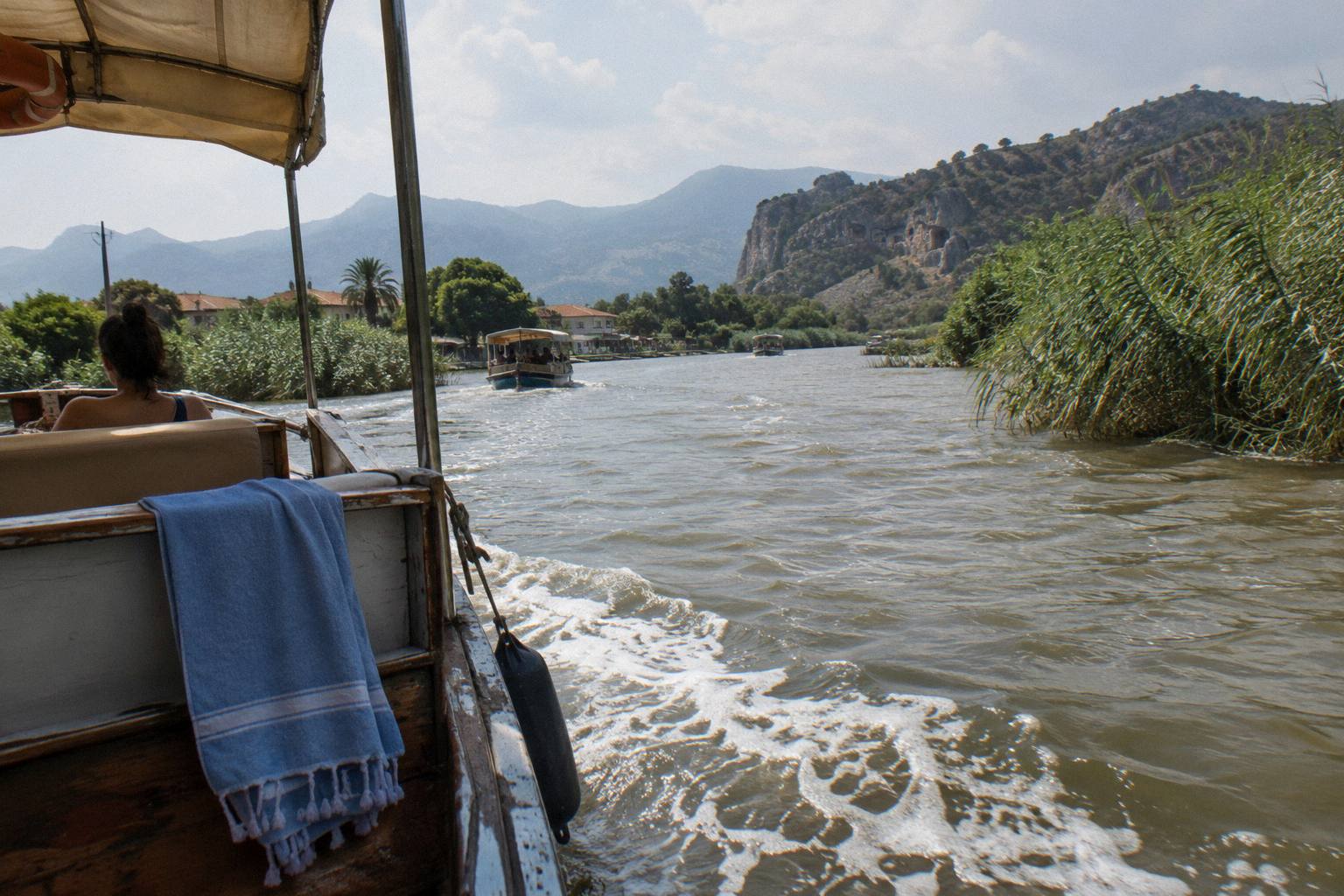
Whichever departure area fits, the tombs come with the territory: every shared river day here passes the cliff, and the two city-stop trips add the ruins behind it. Pick by price, duration and transfer, in that order, and the rock tombs take care of themselves. The whole boat-day geography, from Dalyan Mud Bath out to the river mouth, is covered in the guides linked throughout this piece, including where the boat day goes on Köyceğiz Lake and the channel.
Common Questions About Kaunos And The Rock Tombs
Are The Kaunos Rock Tombs Visible From The Boat?
Yes. Every shared boat trip covered here passes or photographs the tombs from the river, and they can also be seen from Dalyan itself. The boats slow for photographs but, on most trips, do not land.
Do Any Dalyan Boat Trips Stop At Kaunos Itself?
Two do: the Arbek Classic from Dalyan, from €38 per person, and the private full-day Ekincik boat, from €584.90 per boat. The private half-day boat holds a 30-minute viewing stop from the river without landing.
How Old Are The Rock Tombs?
They were built in the 4th century BC and reused in the Roman period. The eastmost tomb was left unfinished when Alexander arrived.
Why Do The Tombs Look Like Temples?
Each chamber was cut with a facade shaped like an Ionic temple, with columns and a pediment carved directly into the cliff face. The design marked the status of the person buried inside.
What Were The Hollows Beside The Tombs For?
According to the Turkish Ministry of Culture and Tourism's museum directory, the rock-cut hollows held large fires that served as beacons for ships entering the ancient harbour.
Is Kaunos A UNESCO Site?
Kaunos has been on the UNESCO World Heritage Tentative List since 2014, which is a step toward full listing rather than full World Heritage status itself.