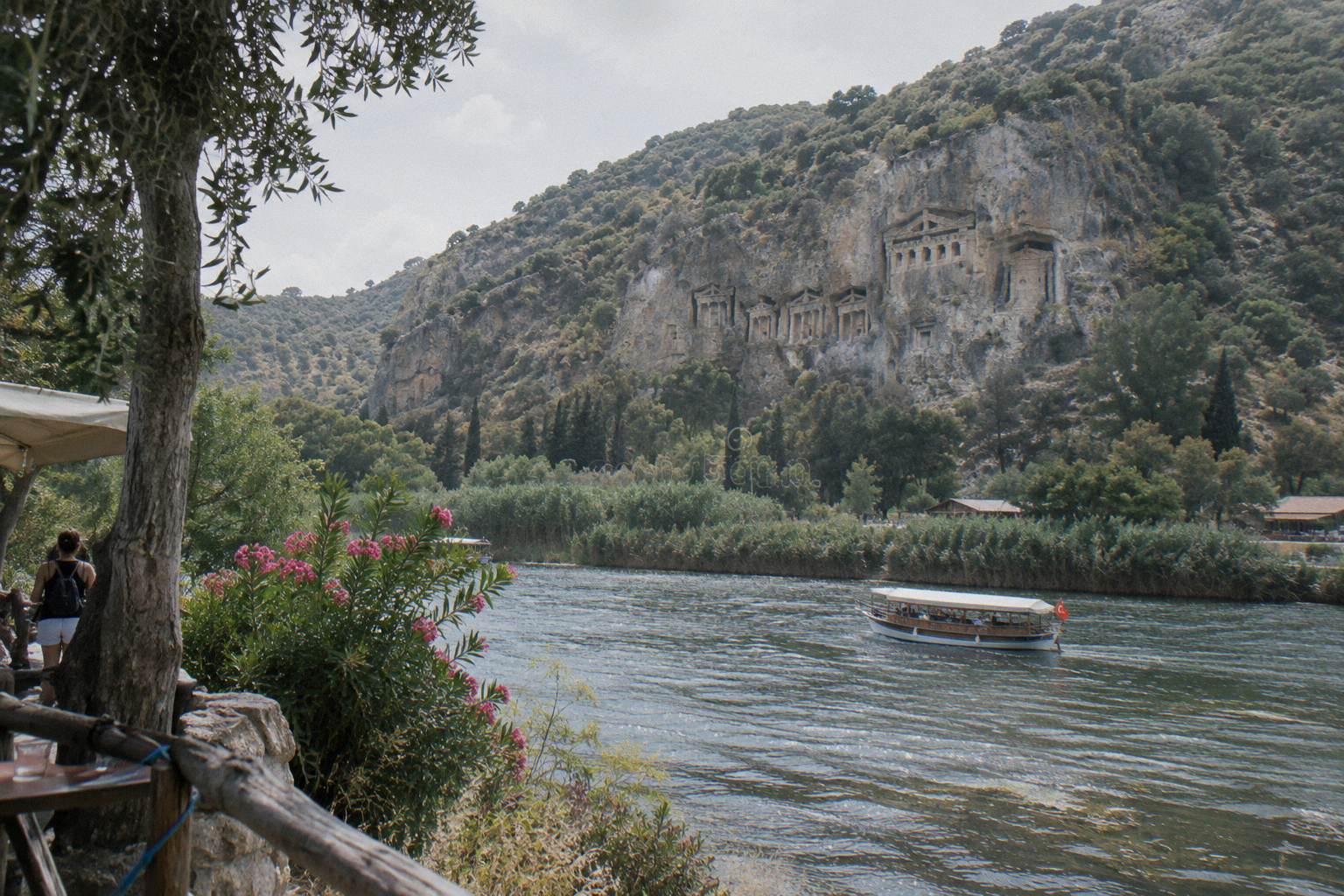
Dalyan Weather And The Best Month For A Mud Bath And Boat Day
The nearest weather station to Dalyan is at Dalaman, and its twelve-month record tells you plainly which months give a boat day the most sun and the fewest rainy interruptions.
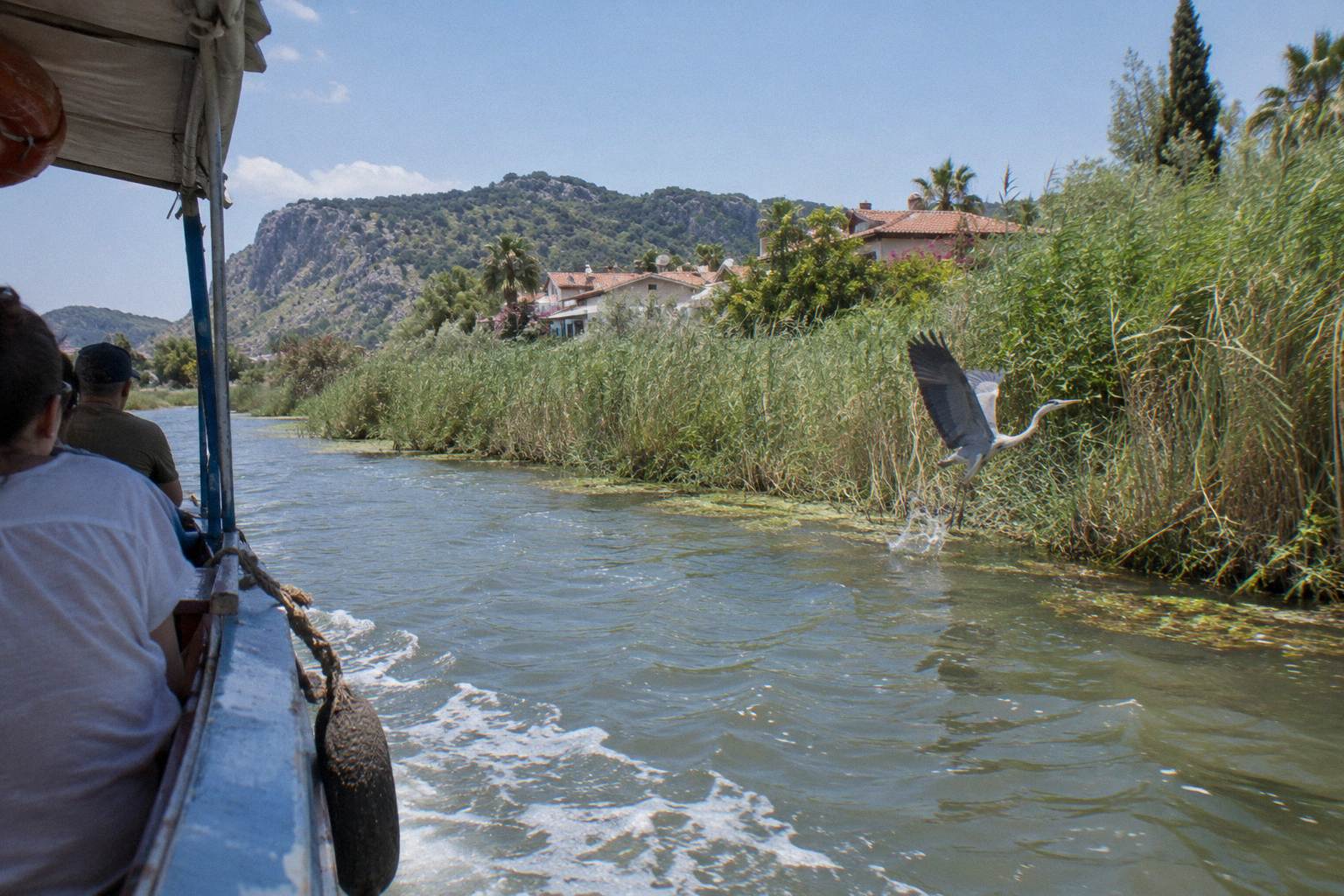
Short answer
Dalaman, the nearest station to Dalyan, records the most sunshine in July (366 hours) and August (347 hours) with almost no rain, while January and December bring 12 or more rain days and only about 155 hours of sun. May, June, September and October sit between the two extremes.
The nearest weather station to Dalyan is at Dalaman, the airport town about 25 km away. Its monthly record, published in a Wikipedia table sourced to the Turkish State Meteorological Service, is the only solid month data for this coast: sunshine hours, rain days, daytime highs, night-time lows and approximate sea temperatures for each month of the year. Reading that table is the whole job of picking a month for a boat day, because a Dalyan boat trip is outdoors from the first river bend to the last.
That matters more here than it would for a city break. A typical Dalyan day moves between a river boat, a mud bath facility on the far bank of the channel, a beach at the river mouth and a lunch table, and only the last of those is under a roof. The sun column, the rain column and the sea column therefore describe the day itself, not a backdrop to it. Dalyan sits in the Ortaca district of Muğla Province on the channel that links Köyceğiz Lake to the sea, a waterway named for the fishing weirs set in it for centuries, as described on the Ministry of Culture and Tourism's Dalyan page. The weather recorded at Dalaman is the weather that falls on all of it.
What The Dalyan Weather Table Shows Month By Month
The Dalaman table gives every month a mean daily maximum, a mean daily minimum, total sunshine hours, a count of rain days and an approximate sea temperature. July tops the sunshine column at 366 hours and bottoms the rain column at 1.4 days, while January sits at 158 hours of sun and 12.2 rain days. Every other month falls somewhere along that slope.
Dalaman is the nearest station to Dalyan, and the figures it records describe the strip of coast shared by Dalaman, Dalyan, Fethiye and Marmaris. The sea temperatures are approximate monthly means for that stretch of water, not readings taken off one particular beach. Everything below is copied exactly from the table, month by month, with no figures added from anywhere else.
Read the columns in pairs and the shape of the year appears. The sunshine column climbs from 152 hours in December to 366 in July, then slides back down. The rain column does the opposite: 12.1 days in December, falling to 1.4 in July. The daytime maximum follows the sun, from 15.8 °C in January to 33.9 °C in July and August. Nowhere does the table contradict itself, which is what makes it usable for planning.
| Month | Mean Daily Max (C) | Mean Daily Min (C) | Sunshine Hours | Rain Days | Approx. Sea Temp (C) |
|---|---|---|---|---|---|
| Jan | 15.8 | 5.6 | 158 | 12.2 | 17 to 19 |
| Feb | 16.1 | 5.8 | 157 | 10.8 | 17 |
| Mar | 18.5 | 7.0 | 214 | 9.0 | 17 |
| Apr | 21.8 | 9.6 | 237 | 7.4 | 17 to 18 |
| May | 26.3 | 13.5 | 301 | 4.3 | 20 |
| Jun | 31.5 | 17.8 | 342 | 2.2 | 23 |
| Jul | 33.9 | 20.7 | 366 | 1.4 | 26 |
| Aug | 33.9 | 20.6 | 347 | 1.5 | 27 |
| Sep | 31.1 | 17.2 | 300 | 2.1 | 26 |
| Oct | 26.7 | 13.3 | 245 | 5.0 | 24 |
| Nov | 21.3 | 9.4 | 183 | 8.8 | 21 |
| Dec | 17.0 | 6.9 | 152 | 12.1 | 19 |
The table is sourced to the Turkish State Meteorological Service figures for Dalaman. Because Dalyan lies on the same coastal strip, a reader choosing a month here is reading the same weather the boat crews, the beach and the mud bath stop all sit in. No other month data exists for this page, and none is inferred.
Two cautions about reading averages. A mean daily maximum is not a promise for any single day; it is the middle of a month's afternoons. And a count of rain days says nothing about how heavy the rain is when it comes, only that some falls. Both figures are still the right ones to plan with, because they are consistent across the whole year and come from the one station that covers this coast.
Which Month Has The Most Sunshine And Least Rain
July and August are the two standout months on paper: both average a 33.9 °C daily maximum, both bring almost no rain at all, and July alone records 366 hours of sunshine against just 1.4 rain days. May, June, September and October form a gentler middle band with between 245 and 342 sunshine hours and no more than five rain days each.
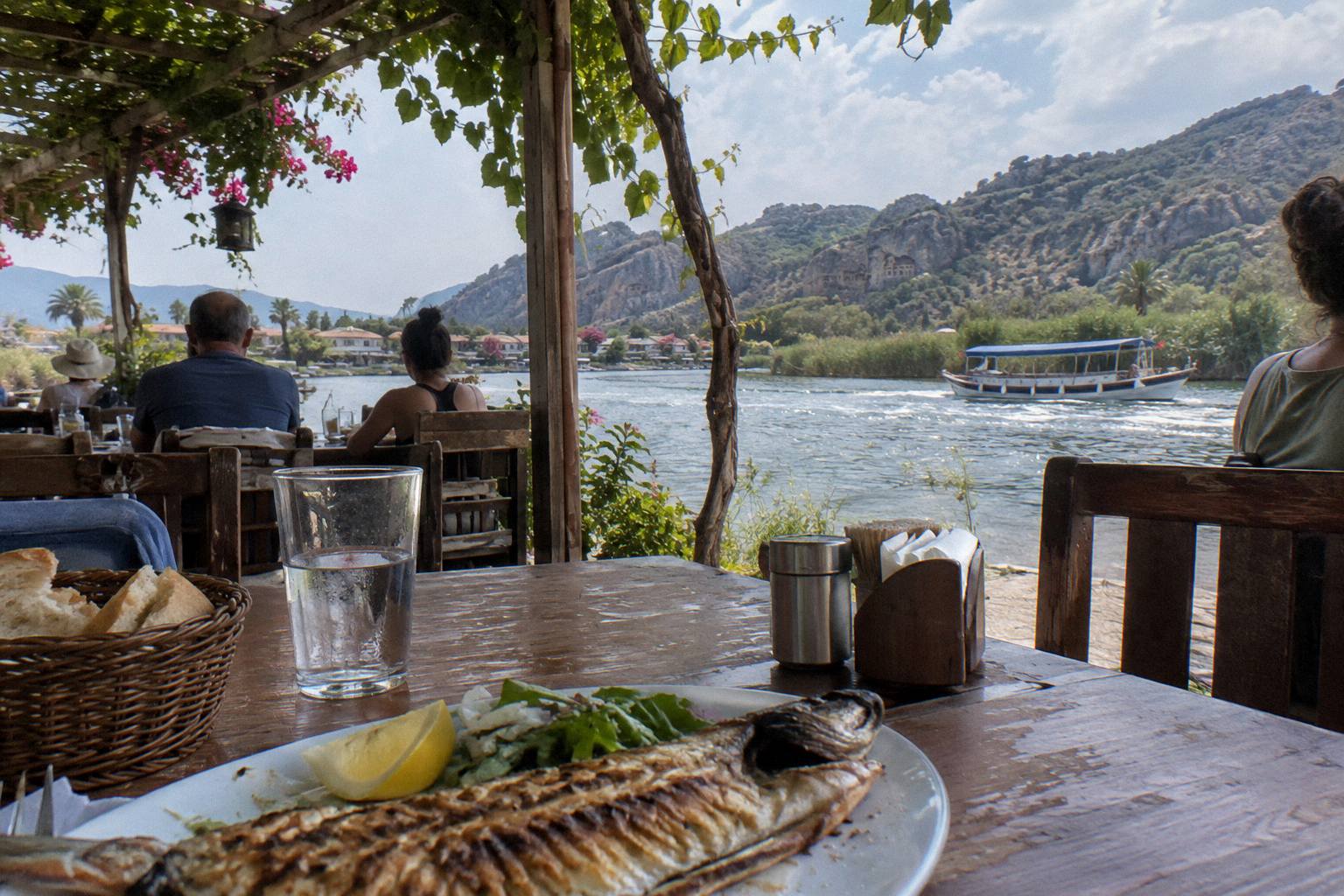
July and August are almost dry: 2.8 mm of rain in July and 1.9 mm in August across the whole month. Those two months also carry the highest daytime figures on the table, 33.9 °C, with nights that barely fall below 20 °C. A boat day is outdoors, so that combination cuts both ways: near-certain sun, and heat to plan around rather than ignore.
September reads as the closest thing the table offers to a shoulder balance. Its daily maximum is 31.1 °C, it keeps 300 sunshine hours, rain falls on 2.1 days, and the sea is still about 26 °C. October drops the maximum to 26.7 °C and sunshine to 245 hours while rain days rise to 5.0. May sits at the spring end of the same band: 26.3 °C, 301 sunshine hours, 4.3 rain days and a sea of about 20 °C.
Between October and May the table turns. November falls to 183 sunshine hours and 8.8 rain days, and from December through February the rain count sits above ten days a month. The night-time minimum is the quiet story of those months: 5.6 °C in January, 5.8 °C in February, 6.9 °C in December. An evening on the water in winter is a different experience from an evening in August, when the minimum is 20.6 °C.
For a trip picked to match those sun-heavy months, the Basket Gezi Sarıgerme river cruise and turtle beach day runs 9 hours with the mud bath fee and lunch included, from €60.93 per person, rated 4.9 from 65 reviews, with free cancellation up to 24 hours before the start. Check availability. Its booking page also cautions: "Not recommended for travelers with poor cardiovascular health / Travelers should have at least a moderate level of physical fitness", wording worth weighing for a full day out in the July and August figures above.
Beyond the sun and rain columns, the table says nothing about crowds, prices or availability in any month, so nothing here should be read as a verdict on when to travel. The figures describe the weather, and the weather is one input among several. For the question of what a given price covers in any season, the breakdown of what a Dalyan day trip price includes is the companion piece.
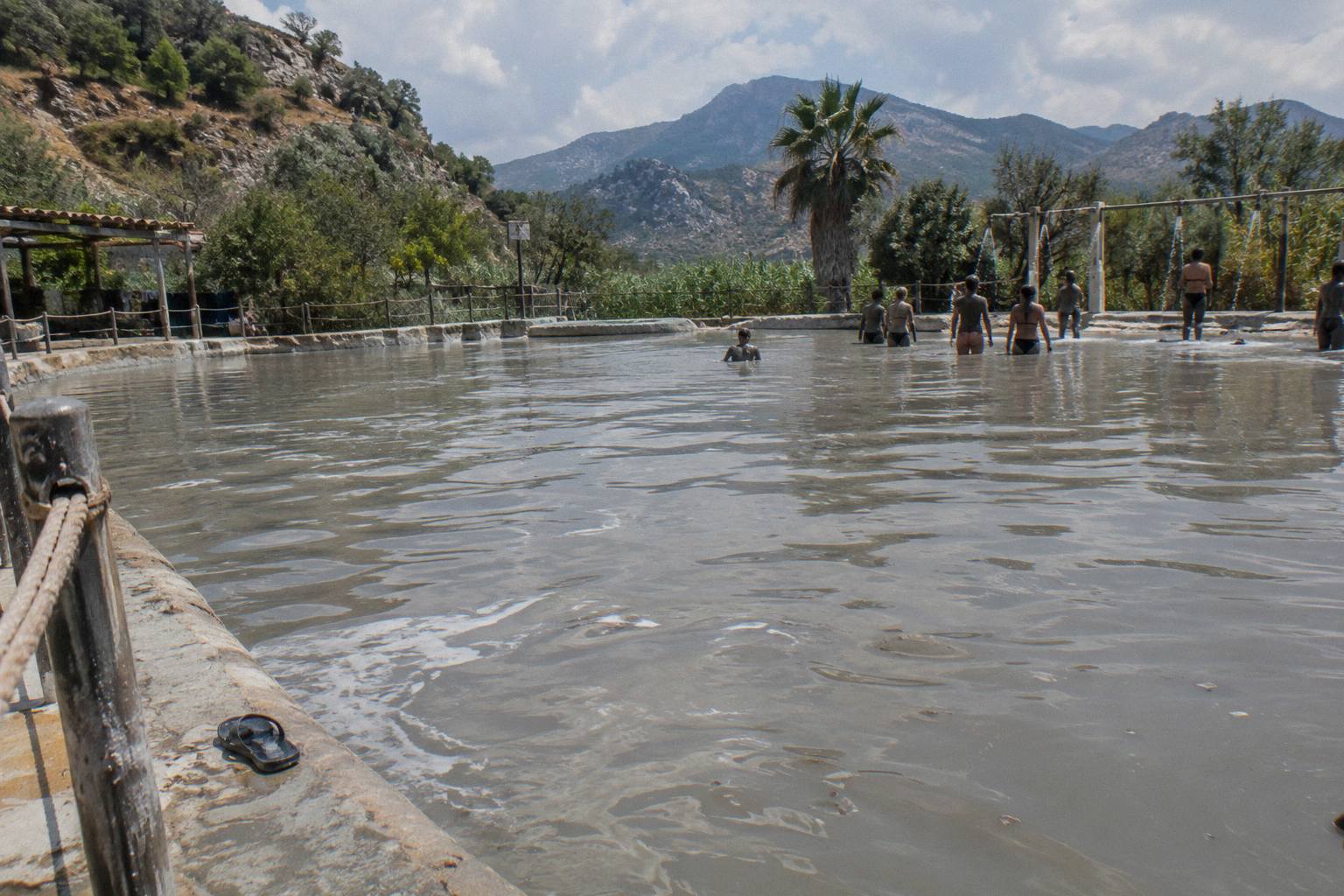
The same caution applies to the mud bath stop itself. No month-specific claim about the mud baths can be made from this data, and none is. The facility is a day-use place reached by boat, described by the Ministry of Culture and Tourism's portal as lying about 15 minutes from Dalyan centre on the far bank of the channel, and the river carries boats to it in every month on the table. The weather decides how the day feels, not whether the stop exists.
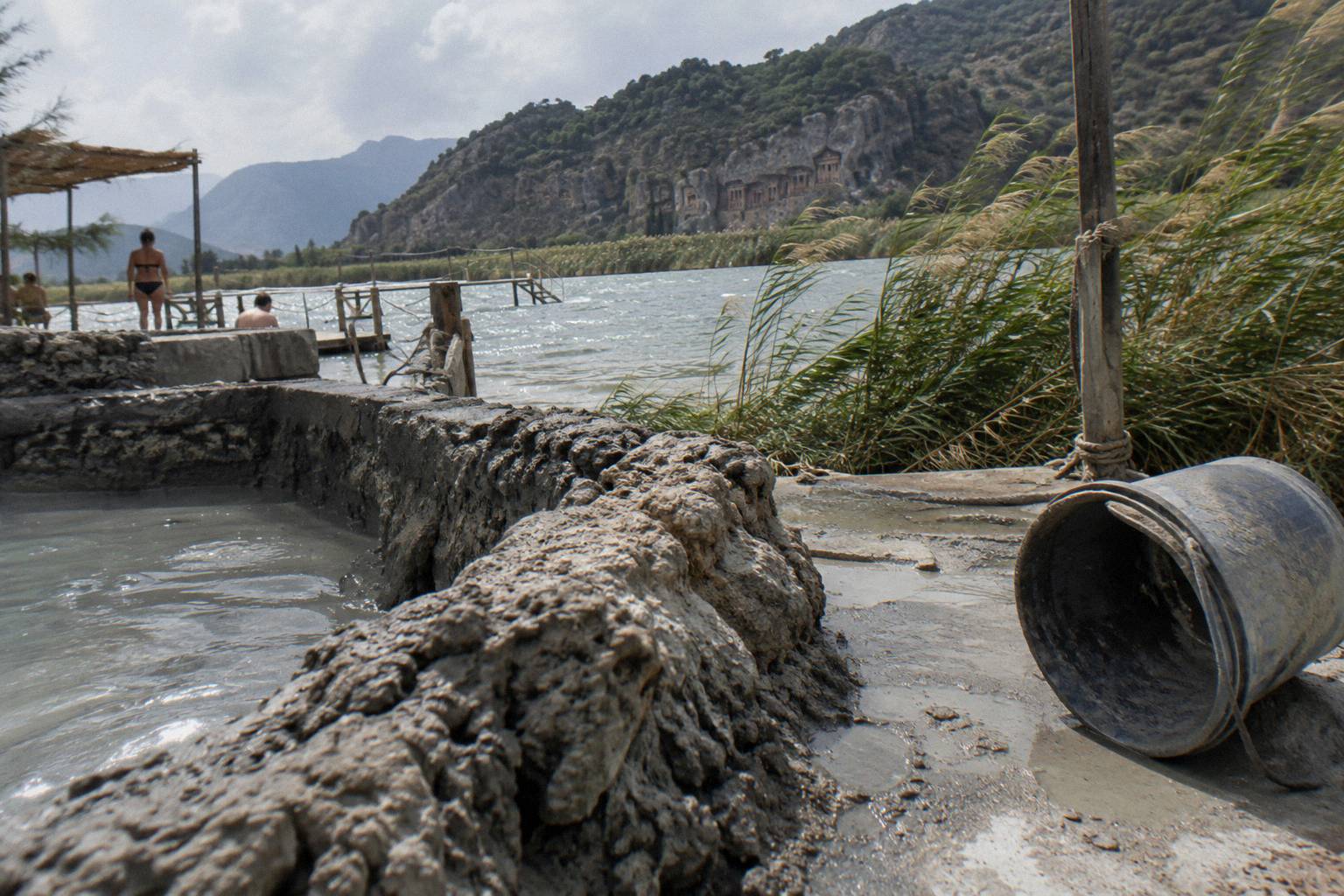
Sea Temperature By Month At Dalyan
The sea along this coast runs from about 17 °C in winter to about 27 °C in August, with the usable warmth arriving from June, when it reaches about 23 °C, and holding near 24 to 26 °C through September and October. From November to April the water sits between 17 and 19 °C, figures most swimmers will read as cold.
These are approximate monthly means for the stretch shared by Dalaman, Dalyan, Fethiye and Marmaris, and İztuzu Beach, the spit where the river trips land, sits inside that stretch. The beach is about 4.5 km of sand between the Mediterranean and the Dalyan delta, one of the main loggerhead nesting beaches in the Mediterranean, with an average of about 300 nests a year, as described in the background on İztuzu Beach.
The beach has two sides with two water moods. Boats from Dalyan land at the river-mouth end at the north-west tip, where the channel meets the sea, and the Ministry portal calls İztuzu one of the rare beaches where fresh water meets the sea. The sea column in the table describes the Mediterranean side; the river side is a separate body of water with no figures attached anywhere on this page.
| Period | Approx. Sea Temperature |
|---|---|
| Dec to Mar | 17 to 19 °C |
| Apr | 17 to 18 °C |
| May | 20 °C |
| Jun | 23 °C |
| Jul | 26 °C |
| Aug | 27 °C |
| Sep | 26 °C |
| Oct | 24 °C |
| Nov | 21 °C |
The year in the sea column divides cleanly in three. December through April is the cold band, 17 to 18 °C. May is the hinge month at 20 °C, warm enough for some swimmers and not others. June through October is the warm band, 23 to 27 °C, peaking in August and staying at 26 °C through September before easing to 24 °C in October. November at 21 °C is the mirror of May, the autumn hinge.
Swimming is not the whole of a boat day: the mud bath stop, the river cruise and the rock tombs happen regardless of water temperature. But a beach stop where the sea reads 27 °C is a different hour from one where it reads 17 °C, and the table lets a reader weigh that before choosing dates. A traveller who plans the beach hour as the centrepiece of the day will read the sea column first; one who comes for the river and the mud bath can treat it as a footnote.
The Basket Gezi Sarıgerme Cruise, covered above, lists an İztuzu Beach stop among its river stops, so the sea figures apply directly to its day. Check availability for the Basket Gezi day. Check availability.
The beach rules do not change with the month, but the nesting season gives them a shape. The Ministry portal notes that Caretta carettas nest from May to September and the beach closes to visitors from 20:00 to 08:00 during the nesting season, and the wider rules, no vehicles or animals, no sunbeds or parasols in marked nesting zones, speedboats banned within a 1-mile zone of the beach and in the delta and river, are posted on site, per the recorded beach rules for İztuzu. The ecosystem around the beach also includes blue crabs, Nile soft-shell turtles and nearly 180 bird species. For how the nesting season shapes a visit, see the guide to turtle beach nesting season rules.
One more seasonal note belongs here: the nesting season, May to September, overlaps almost exactly with the warm sea band in the table. A reader booking for the swim is therefore also booking inside the season when the evening closure applies, which is one reason the day trips land in daylight hours and leave the beach before dark.
Fitting A Boat Day Around The Heat
The trips here run from a 4-hour evening cruise up to a 12 hour 30 minute Bodrum day, and the July and August maximum of 33.9 °C makes duration a real planning choice: a short Dalyan-area trip puts fewer of the hottest hours into the schedule than a long transfer day from Bodrum or Marmaris. The table supplies the heat; the trip lengths supply the options.
Where a trip departs from matters as much as its length, because the transfer legs add hours on either side of the river. Dalyan to Marmaris is roughly 1 to 1.5 hours each way and Dalyan to Bodrum roughly 2.5 to 3 hours, about 190 to 204 km, which is why the Bodrum trips run 12 hours or more while the Dalyan-area trips finish far sooner. Dalyan to Fethiye is roughly 1 to 1.5 hours, about 65 km.
The heat arithmetic is simple and needs no figures beyond the table. A 12-hour day in August contains the 33.9 °C afternoon in full. A 4-hour evening trip starts as that afternoon ends. A Dalyan-area 8-hour day sits somewhere between, with the river breeze as the one comfort the table cannot measure.
| Trip | Duration | Departs From | Price | Rating |
|---|---|---|---|---|
| Moonlight Cruise, Barbecue | 4 hours | Dalyan area | from €45 per person | Fewer than 20 reviews |
| Arbek Sarıgerme, Rock Tombs | 7 hours 30 minutes | Dalyan area | from €65 per person | Fewer than 20 reviews |
| Arbek Classic, From Dalyan | 8 hours | Dalyan area | from €38 per person | 4.2 from 20 reviews |
| Laal DMC River Boat | 8 hours | Dalyan area | from €74.45 per person | Fewer than 20 reviews |
| Basket Gezi Sarıgerme Cruise | 9 hours | Dalyan area | from €60.93 per person | 4.9 from 65 reviews |
| Tourmania Marmaris, Lunch Included | 10 hours | Marmaris area | from €50 per person | 4.5 from 298 reviews |
| Tourmania Bodrum Bus Day, Lunch | 12 hours | Bodrum area | from €99 per person | 4.2 from 43 reviews |
| Director Tour From Bodrum | 12 hours 30 minutes | Bodrum area | from €84 per person | Check the booking page |
The shortest option is the evening one. The Moonlight Cruise, Barbecue runs 4 hours with a barbecue dinner, the mud bath fee included and a thermal pool stop, from €45 per person, minimum age 10, with pickup from Dalyan area hotels one way only and free cancellation up to 24 hours before the start. An evening departure sidesteps the midday maximum in the table entirely. See the Moonlight Cruise evening trip. Check availability. The guide to Dalyan evening boat trips covers the format in full.
From the Marmaris side, the Tourmania Marmaris day runs 10 hours with hotel pickup and drop-off, lunch and the mud bath included, from €50 per person, rated 4.5 from 298 reviews, with free cancellation up to 24 hours before the start. Ten of the hottest hours on the clock in July or August, against a door-to-door service that removes the driving.
The Bodrum pair stretches furthest. The Tourmania Bodrum Bus Day runs 12 hours from €99 per person, rated 4.2 from 43 reviews, with hotel pickup and drop-off, lunch and the mud bath included; the Director Tour day runs 12 hours 30 minutes from €84 per person with entrance fees, insurance, lunch and a river boat trip included. Both leave Bodrum, roughly 2.5 to 3 hours from Dalyan by road, so most of the added length is transfer, not river. In the July and August rows of the table, that is a long time either on a bus or out in the sun.
The Director Tour's booking page carries a caution worth quoting for summer dates: "Not recommended for travelers with poor cardiovascular health". The same words appear on the Basket Gezi and several other lines here, and the guide to heart, fitness and age limits on a Dalyan boat day gathers them in one place for readers comparing trips with that in mind.
For readers weighing a private boat against a group day in any month, the comparison of a private boat and a group tour in Dalyan sets out the trade-offs; note that the half-day private boat has no mud bath stop at all, and it is also the one trip here with no free cancellation stated.
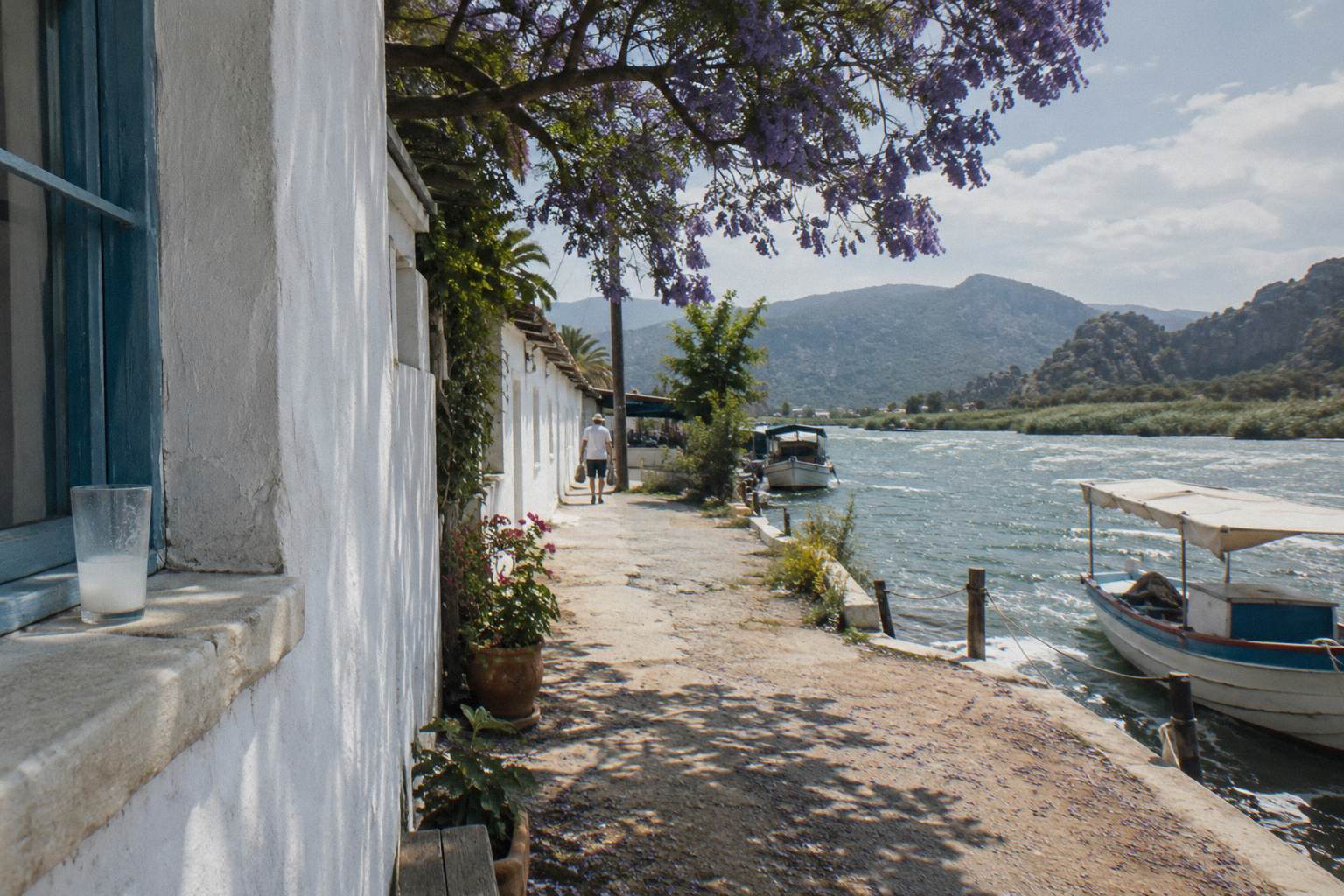
Rain Days And The Winter Boat Day
January and December are the wettest months on the table with 12.2 and 12.1 rain days, and November and February follow at 8.8 and 10.8, so a winter booking carries a real chance of a rainy day out. Spring and autumn sit in the middle: March and November both record 9 or fewer rain days, while April falls to 7.4.
Even the wettest month is not wet most of the time. January's 12.2 rain days still leave the majority of the month dry, and the sunshine column keeps a floor of 152 to 158 hours through the whole winter. February, at 157 hours and 10.8 rain days, is January's twin. The difference between a winter week and a summer week is the odds of a washout, not the certainty of one.
Nothing in the table says the boats stop running in winter. Every trip listed here offers free cancellation up to 24 hours before the start, except the half-day private boat, which states none, so a rainy forecast can be answered by cancelling the day before rather than losing the booking. That policy is a planning tool in the wetter months in a way it rarely needs to be in July.
The winter sea figures, 17 to 19 °C from December through March, and daytime maximums of 15.8 to 18.5 °C in January to March, describe a coast that is mild rather than cold. Sunshine still totals 157 to 214 hours a month across the first quarter. March is the month where the turn begins: the maximum reaches 18.5 °C, rain days fall to 9.0 and sunshine rises to 214 hours, and every column keeps moving the same way through April and May.
One practical reading of the winter rows: book the boat day for the middle of a stay rather than the first day, so a rainy forecast can be answered by moving the booking instead of cancelling it outright. The free cancellation window of 24 hours makes that workable. Readers who want the full seasonal picture for the river itself can look at the month-by-month planning notes for the boat day.
The mud bath stop behaves the same in any month, so far as any published information says. The Ministry of Culture and Tourism's portal describes hot sulphurous spring water emerging in the Çandır and Sultaniye village areas on the far bank of the channel, and describes the waters as "a remedy for many ailments, above all rheumatism and skin diseases", wording that belongs to the portal and is repeated here only as its description, per the Ministry portal's mud baths page. What the weather table adds is only how the day around the stop will feel.
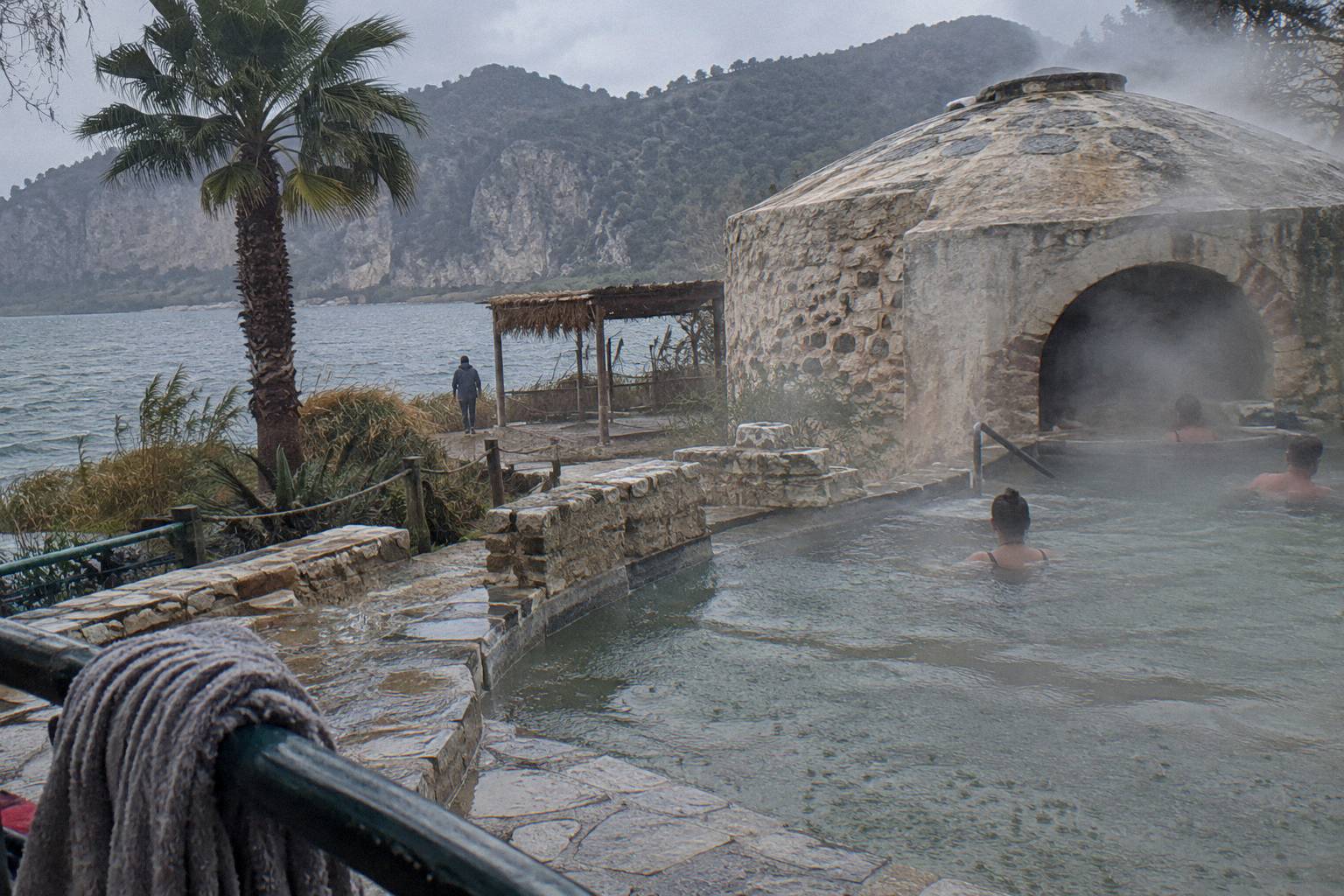
Getting There And Timing The Day
Dalaman Airport sits about 25 km from Dalyan, roughly 25 to 35 minutes by road, and it serves Marmaris, Fethiye, Köyceğiz, Dalyan, Ölüdeniz and Hisarönü, with its international terminal opened in July 2018. A flight-and-boat-day plan built around those approximate transfer times is realistic in any month, since the distances do not change with the seasons.
The transfer times are approximate and traffic-dependent, so they are planning figures, not promises. Fethiye lies about 45 to 60 km from the airport and Marmaris about 90 to 110 km, roughly 1.5 to 2 hours, per the transfer-operator figures; the airport background comes from the Dalaman Airport reference page. The other transfer figures run: Sarıgerme 15 km, about 20 minutes; Ortaca 20 to 23 km; Göcek 20 to 25 km, 20 to 30 minutes; Köyceğiz 35 km, 35 minutes; Ölüdeniz 60 to 65 km; İçmeler 100 to 108 km, 1.5 to 2 hours.
Distance matters for the weather question in one direct way: the further the departure point from Dalyan, the earlier the day starts, and the earlier a day starts in summer, the more of it falls inside the cool morning hours before the 33.9 °C afternoon. A Bodrum departure in August therefore experiences both the longest schedule and the widest spread of the day's temperatures. Pickup arrangements themselves vary trip by trip and are worth confirming with the operator when booking.
The trips here are priced in EUR on the booking page; the local currency is the Turkish lira. For the airport-area trips, the guide to Dalyan boat trips from Dalaman and Sarıgerme covers the departure side in detail, and the Fethiye departure guide does the same for the 45 to 60 km side of the coast.
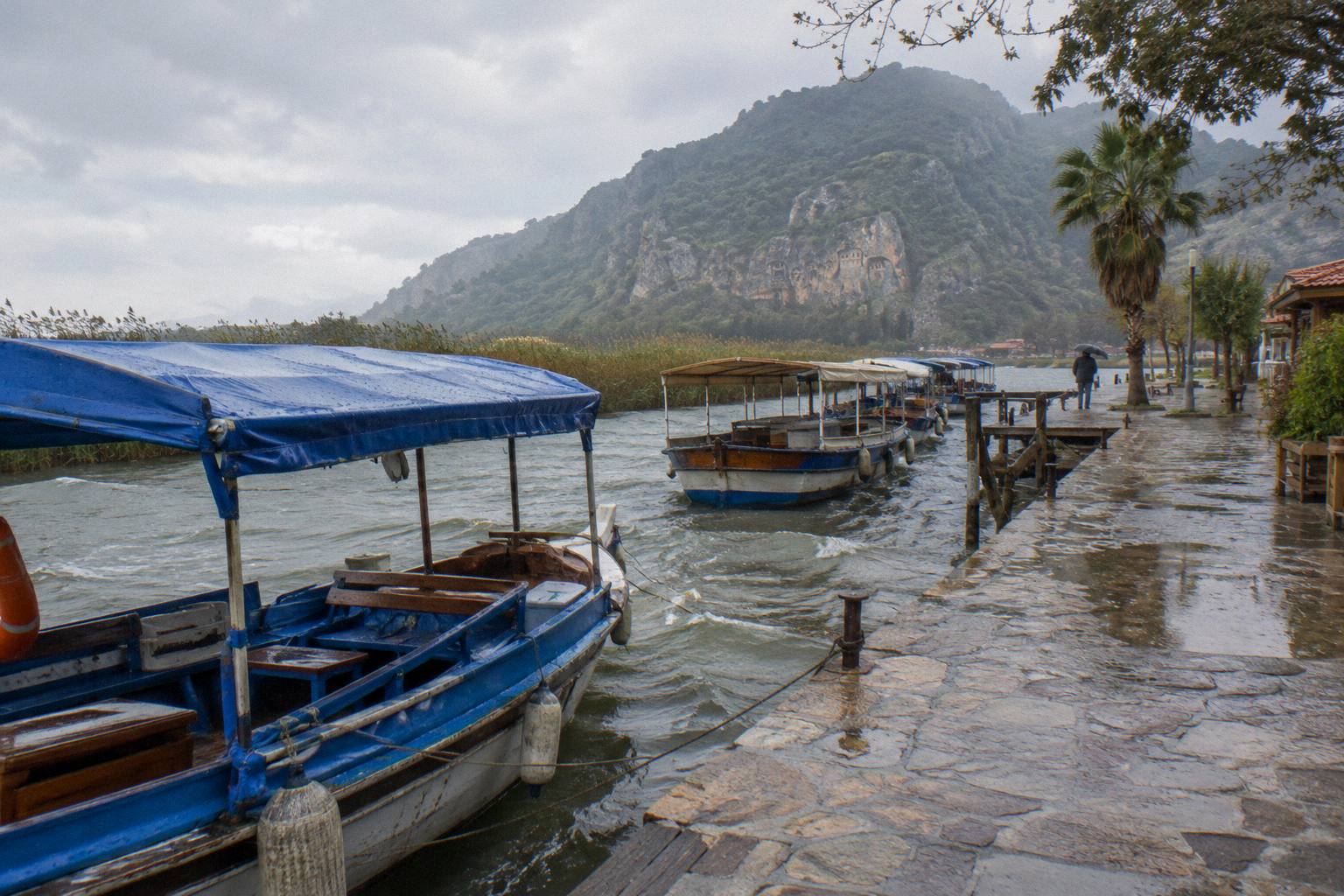
Choosing between the three Dalyan-area options is simplest by price and length: the Arbek Classic runs 8 hours from €38 per person, rated 4.2 from 20 reviews, with a guided city stop at Kaunos, while the Laal DMC River Boat runs 8 hours from €74.45 per person with both the mud bath and İztuzu entrance included and a minimum age of 1. Weather-wise they are identical days on the same water; the differences are in the inclusions. For travellers with children, the guide to kids and older travellers on a boat day covers the age lines in full.
The table is the whole of the month data available for this coast, and it is enough to choose with: pick the sun column for a beach-heavy day, the rain column for a winter booking, and the sea column for the swim. Dalyan itself, the mud bath stop, Kaunos and the river routes all lie inside the Köyceğiz-Dalyan Special Environmental Protection Area, 461 sq km and the first such area in Turkey, as noted on the protected-area background page. The Dalyan Mud Bath planning guides cover each stop on the river in the same month-neutral way, including which boat day with a mud bath stop to book and from where.
Common Questions About Weather And Timing
What Is The Best Month For A Dalyan Boat Day?
The Dalaman table gives July and August the most sunshine (366 and 347 hours) and the fewest rain days (1.4 and 1.5), with a 33.9 °C daily maximum. May, June, September and October offer a gentler balance: 245 to 342 sunshine hours, at most 5 rain days, and sea temperatures of 20 to 26 °C. The table describes the weather only; no crowd, price or availability claim is made for any month.
What Is The Sea Temperature At Dalyan?
Approximate monthly means run from 17 °C in winter to 27 °C in August. The sea reaches about 23 °C in June, 26 °C in July and September, and 24 °C in October, then falls back through 21 °C in November to 17 to 19 °C from December to April.
How Much Rain Does Dalyan Get?
January and December record 12.2 and 12.1 rain days a month, February 10.8 and November 8.8. July and August are almost dry at 2.8 mm and 1.9 mm for the whole month. Spring and autumn sit in between: April has 7.4 rain days and October 5.0.
Is Dalyan Hot In Summer?
July and August both average a daily maximum of 33.9 °C with minimums above 20 °C. June and September are close behind at 31.5 °C and 31.1 °C. A boat day is outdoors, so the trip's length and departure point are worth weighing against those figures.
Do The Boat Trips Run In Winter?
Nothing in the weather data suggests the boats stop. Winter days are mild, 15.8 to 18.5 °C maximums from January to March, with 157 to 214 sunshine hours a month, and every trip here offers free cancellation up to 24 hours before the start except the half-day private boat, which states none.
Where Does The Dalyan Weather Data Come From?
Dalaman is the nearest weather station to Dalyan, about 25 km away. Its monthly figures, published in a table sourced to the Turkish State Meteorological Service, cover the coast shared by Dalaman, Dalyan, Fethiye and Marmaris, including approximate sea temperatures.